Devon Schulz · 17 September 2026
Analyzing Shear Stability Metrics in Long-Drain Interval Lubricants for Commercial Transport Fleets
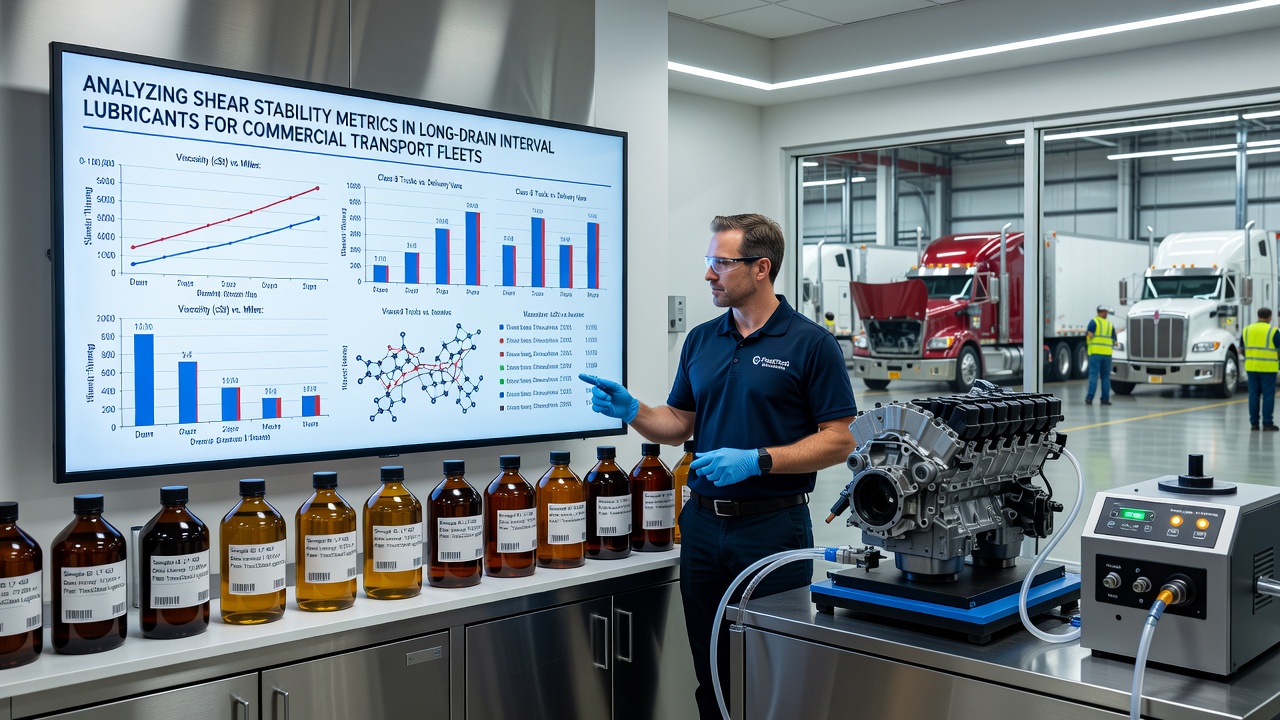
Commercial transport fleets rely on long-drain interval lubricants to extend service periods while maintaining engine protection under heavy loads and high temperatures, and shear stability serves as a key performance indicator in these formulations. Shear stability measures a lubricant's ability to resist viscosity loss when exposed to mechanical forces inside engines and transmissions, which directly affects how well the oil maintains film strength during extended operation. Researchers track this property through standardized tests that simulate real-world conditions in heavy-duty vehicles, and data from fleet operations show that oils with higher shear stability support longer intervals without compromising component wear rates.
Core Metrics Used in Shear Stability Evaluation
Industry standards define several tests that quantify shear stability, including the Kurt Orbahn test which applies controlled mechanical shearing to oil samples and records viscosity changes after 30 cycles or more. The High Temperature High Shear test, often abbreviated as HTHS, evaluates viscosity at 150 degrees Celsius under 10 to the sixth power per second shear rates, providing figures that correlate with engine protection at operating temperatures. According to ASTM International procedures, these measurements help predict how a lubricant will perform when drain intervals stretch beyond 60,000 kilometers in diesel fleets, and studies from fleet databases indicate that formulations retaining at least 90 percent of original viscosity after shearing deliver measurable reductions in bearing wear.
Additional metrics include permanent viscosity loss calculations and temporary viscosity loss assessments that distinguish between recoverable and irreversible thinning. Observers note that long-drain lubricants for commercial use often incorporate viscosity index improvers designed to minimize permanent loss, while data from European testing programs reveal variations across polymer types that affect overall stability. Those who manage fleet maintenance programs frequently review these metrics alongside oxidation stability and total base number to set safe interval limits tailored to specific engine models and duty cycles.
Application in Commercial Fleet Operations
Fleet operators analyze shear stability data when selecting lubricants for trucks that accumulate high mileage between services, since extended drains reduce downtime and maintenance costs when the oil holds up under sustained shear. Research from transport studies shows that oils meeting ACEA E7 or API CK-4 specifications typically demonstrate shear stability thresholds that support intervals of 80,000 kilometers or greater in line-haul applications, provided operating conditions remain within design parameters. And because commercial vehicles experience repeated high-load cycles, the ability of the lubricant to maintain film thickness prevents metal-to-metal contact that could otherwise accelerate component failure.

What's interesting is how regional regulations influence the adoption of these metrics, with Transport Canada guidelines emphasizing performance documentation for extended service intervals in cross-border fleets. Data collected from Australian heavy vehicle operators further demonstrates that lubricants passing stringent shear tests correlate with lower oil consumption rates and extended filter life in mining and logistics fleets. Those who've reviewed maintenance logs across multiple regions find that consistent monitoring of shear stability helps identify when formulations need adjustment due to fuel quality variations or temperature extremes encountered in different climates.
Testing Protocols and Data Interpretation
Standardized laboratory protocols require multiple replicate runs to establish statistical reliability of shear stability results, and fleet analysts compare these laboratory figures against field samples taken at various drain intervals. The reality is that viscosity loss often follows a nonlinear pattern, with the steepest decline occurring in the first 20,000 kilometers before stabilizing, which is why some programs incorporate mid-interval sampling. Researchers at institutions such as those affiliated with the Society of Automotive Engineers have published comparative data showing that certain ester-based and olefin copolymer additives maintain superior stability under prolonged shearing compared with older polymer chemistries.
But here's the thing: interpreting these metrics requires context from actual engine conditions, because bench tests do not fully replicate the combination of thermal cycling, contamination, and load variations present in commercial service. Observers note that fleets using telematics to track oil condition often integrate shear stability predictions with real-time viscosity sensors, allowing adjustments to drain schedules based on measured performance rather than fixed mileage alone. In September 2026, updates to international lubricant specifications are expected to incorporate refined shear stability limits that reflect evolving engine designs and longer warranty requirements from manufacturers.
Impact on Fleet Efficiency and Component Life
Evidence from fleet case studies indicates that selecting lubricants with verified shear stability contributes to improved fuel economy through maintained hydrodynamic lubrication and reduced internal friction. One study revealed that fleets adopting high-stability long-drain oils recorded average interval extensions of 25 percent without increases in engine overhaul frequency, while figures from regulatory bodies in the European Union highlight the role of such lubricants in meeting emissions compliance targets through better engine sealing. Those managing large operations often cross-reference shear data with total acid number trends to confirm that the lubricant continues to neutralize combustion byproducts throughout the extended service period.
Conclusion
Shear stability metrics provide a quantifiable foundation for evaluating long-drain interval lubricants in commercial transport fleets, guiding selection processes that balance extended service with engine durability. Standardized tests supply the data needed to compare formulations, while field performance records validate laboratory predictions under actual operating conditions. As specifications evolve and fleets adopt advanced monitoring tools, the analysis of these metrics will continue to support decisions that optimize maintenance schedules and equipment longevity across diverse transport applications.