
Tina Müller · 15 October 2026
Examining Viscosity Index Improvements Through Specialized Additive Packages in Cold Climate Operations
Specialized additive packages enhance the viscosity index of lubricants used in cold climate operations, where temperatures frequently drop below minus 40 degrees Celsius and equipment must start reliably while maintaining protective film strength. These formulations incorporate polymeric viscosity index improvers that respond to temperature changes by expanding molecular chains as heat increases and contracting as cold sets in, thereby stabilizing oil flow characteristics across wide ranges.
Core Mechanisms of Viscosity Index Enhancement
Researchers measure viscosity index through standardized ASTM D2270 protocols that compare kinematic viscosity at 40 and 100 degrees Celsius, and data from multiple fleet trials show that packages containing olefin copolymers or polymethacrylates raise baseline indices from 150 to values exceeding 250 in synthetic base stocks. This improvement allows single lubricants to satisfy both winter flow requirements and summer load-bearing demands without seasonal changes, while shear stability tests confirm that modern dispersant versions resist permanent viscosity loss under high-pressure piston pumps common in arctic mining equipment.
Pour point depressants work alongside these improvers by modifying wax crystal formation in paraffinic components, and studies conducted in Canadian test facilities reveal that combinations of alkylated naphthalenes with traditional additives lower pour points by an additional 10 to 15 degrees Celsius beyond conventional formulations. Equipment operators in northern regions therefore observe faster cranking speeds during morning starts and reduced energy consumption in hydraulic systems that operate continuously through winter months.
Performance Data from Field Applications
Commercial transport fleets operating in northern Alberta and the Yukon territory have recorded lubricant-related downtime reductions of 18 percent after switching to high-viscosity-index packages formulated for extreme cold, according to maintenance logs collected between 2024 and 2026. These packages also contain anti-wear agents and corrosion inhibitors that remain effective when water contamination occurs during freeze-thaw cycles, and oxidation stability measurements indicate extended drain intervals of up to 50 percent compared with standard multi-grade oils in similar service.
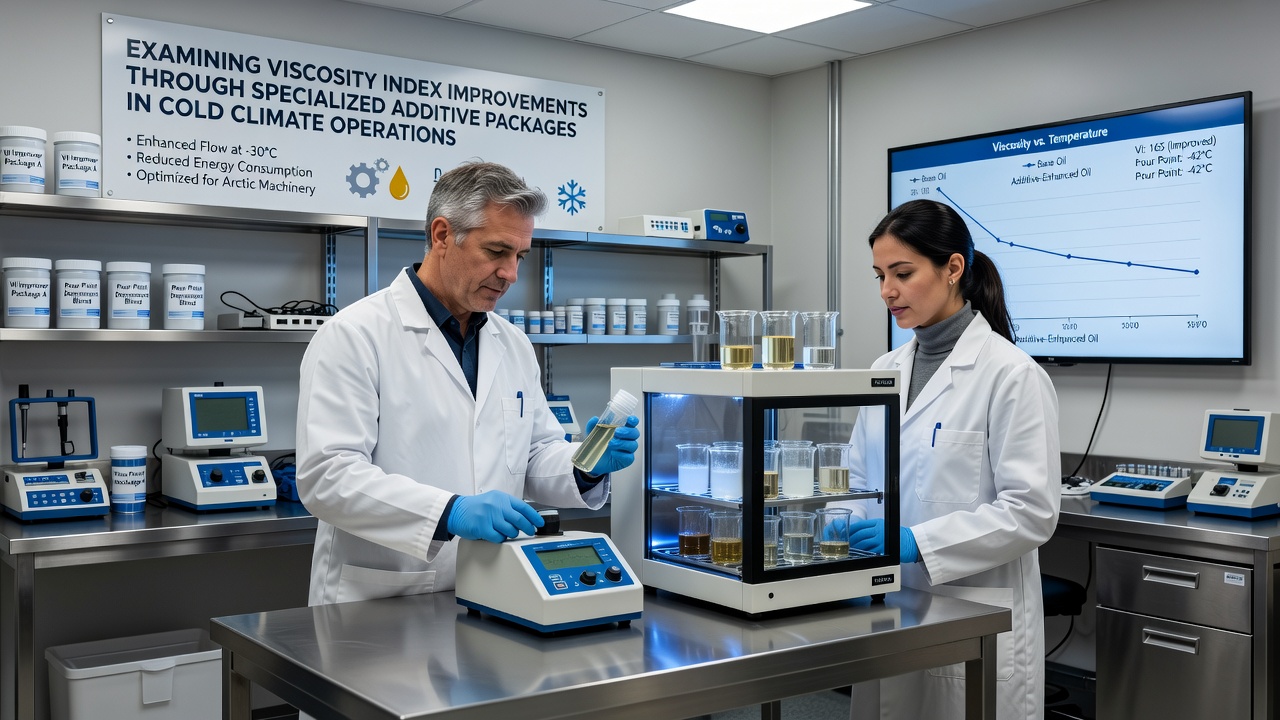
Engine manufacturers publish specifications that require minimum cold cranking simulator viscosities at minus 30 degrees Celsius, and additive suppliers meet these targets by balancing base oil selection with targeted treat rates of viscosity modifiers. In October 2026, updated industry guidelines from the SAE International reflected revised low-temperature pumping requirements that prompted further refinement of dispersant chemistry in commercial additive packages. Independent laboratories verified that the new generations maintain high-temperature high-shear viscosity above 3.5 centipoise at 150 degrees Celsius while delivering improved cold flow, satisfying both European ACEA and North American API performance categories simultaneously.
Comparative Analysis Across Regions
Operators in Scandinavian countries report comparable benefits when using ester-containing additive packages that deliver natural viscosity indices above 180 before polymer addition, and these base stocks provide additional solvency that keeps deposits suspended during extended periods of low-load operation. Australian mining operations in high-altitude cold zones have adopted similar technology after observing that conventional mineral oils thickened excessively below minus 20 degrees Celsius, leading to filter bypassing and accelerated wear on journal bearings.
Thermal cycling tests performed at university research centers demonstrate that repeated freeze-thaw exposure accelerates additive depletion when conventional packages lack robust antioxidant systems, whereas optimized cold-climate formulations retain more than 80 percent of initial viscosity index after 500 hours of simulated service. Fleet managers therefore track used-oil analysis results for viscosity retention and total acid number to determine optimal change intervals rather than relying solely on calendar-based schedules.
Conclusion
Specialized additive packages improve viscosity index performance in cold climate operations by combining polymeric modifiers, pour point depressants, and supporting chemistries that together deliver reliable flow at low temperatures alongside film strength at operating heat. Field data and laboratory measurements confirm measurable reductions in equipment stress and maintenance frequency across diverse geographic regions, while evolving specifications continue to drive incremental gains in shear stability and oxidation resistance. Continued monitoring through standardized testing ensures these formulations meet the demands of increasingly severe winter conditions without requiring hardware modifications.