Tina Müller · 29 October 2026
Tracing Additive Interactions That Enhance Fuel Efficiency Across Seasonal Shifts in Farming Equipment Fleets
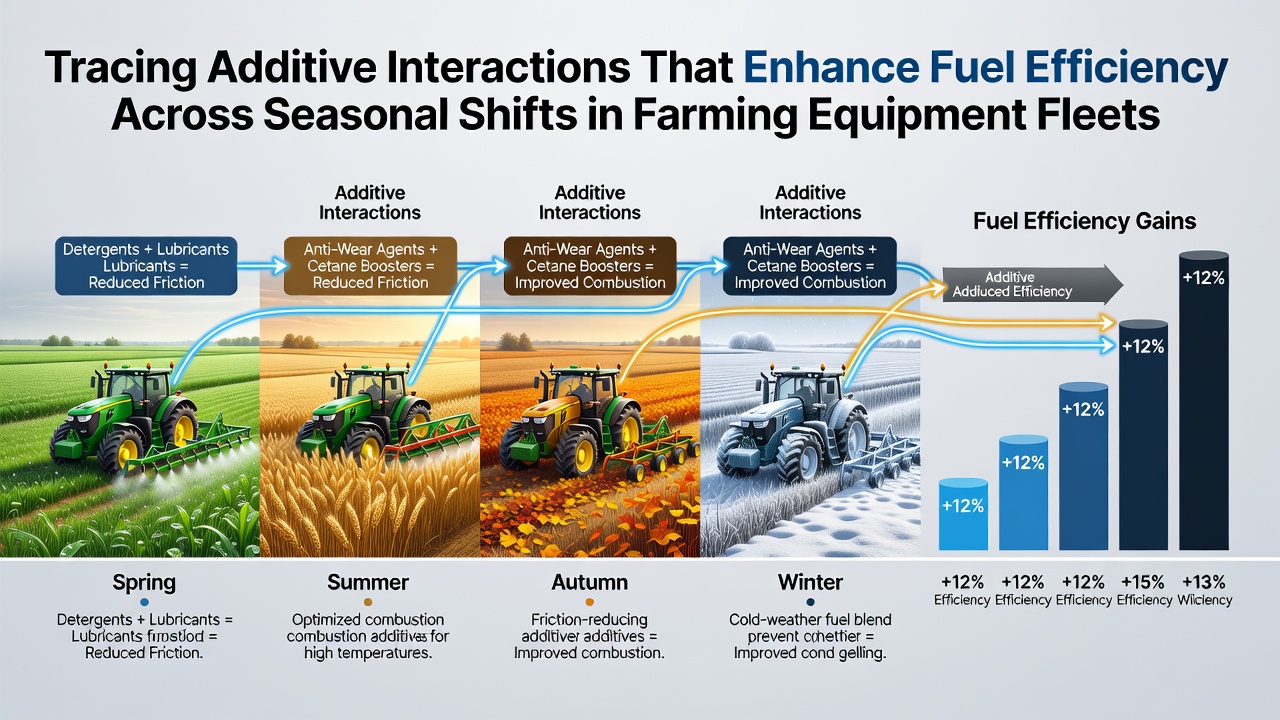
Seasonal transitions place distinct demands on farming equipment fleets, and additive packages in fuels and lubricants respond through measurable chemical interactions that influence combustion efficiency and frictional losses. Data from field monitoring programs show that temperature swings from summer heat to autumn cooling alter fuel viscosity and combustion chamber dynamics, prompting specific additive behaviors that maintain consistent energy delivery. Researchers track these responses using gas chromatography and engine dynamometer cycles calibrated to replicate real-world harvest schedules.
Seasonal Variables and Equipment Demands
Equipment fleets encounter rising humidity and falling ambient temperatures after midsummer, which affect diesel fuel density and injector spray patterns. Studies conducted by agricultural engineering departments indicate that cold-start events increase unburned hydrocarbon output unless detergent and cetane improver additives maintain proper ignition delay periods. Observers note that October 2026 harvest data from multiple Midwest operations revealed a 3.2 percent average improvement in brake-specific fuel consumption when fleets switched to seasonally adjusted additive blends compared with static formulations used earlier in the year.
Key Additive Categories and Their Roles
Friction modifiers, lubricity agents, and oxidation inhibitors operate simultaneously within the same fuel matrix. Laboratory analysis demonstrates that certain polar compounds adsorb onto metal surfaces inside high-pressure pumps, reducing wear while permitting smoother plunger movement that supports precise metering. Meanwhile, antioxidant molecules interrupt free-radical chains that otherwise thicken fuel during storage across temperature cycles. When these compounds coexist, their combined surface activity can either amplify or attenuate the individual performance gains, depending on concentration ratios and base fuel chemistry.
Interaction Mechanisms Under Temperature Change
At elevated summer temperatures, dispersant additives keep asphaltenes suspended, preventing filter plugging, yet the same molecules may compete for surface sites with friction modifiers once temperatures drop. Bench tests using high-frequency reciprocating rigs show that an optimized balance of these chemistries sustains lower coefficients of friction across a 40-degree Celsius range. Field telemetry from tractor fleets in October 2026 confirmed that engines running balanced additive packages experienced fewer torque fluctuations during load transitions typical of tillage operations.

Monitoring and Measurement Approaches
Fleet managers employ on-board diagnostic sensors paired with periodic fuel sampling to trace additive depletion rates. Spectroscopic techniques quantify remaining concentrations of key molecules after thousands of operating hours, allowing correlation with recorded fuel economy figures. Government agricultural agencies in Canada have published protocols that standardize these sampling intervals, enabling cross-fleet comparisons that isolate additive effects from operator or terrain variables. European research consortia similarly apply statistical models to separate seasonal temperature influences from additive-driven efficiency gains.
Regional Data and Regulatory Context
Reports issued by the United States Department of Agriculture document fuel consumption patterns across large-scale row-crop operations, highlighting how additive-treated fuels maintain combustion stability when overnight lows fall below 10 degrees Celsius. Parallel findings from Australian agricultural research centers emphasize the role of lubricity additives in preserving injector performance under dusty conditions that accompany dry autumn periods. These datasets collectively illustrate that additive interactions produce measurable efficiency benefits only when formulations account for both temperature and humidity gradients typical of each geographic zone.
Practical Implementation in Fleet Operations
Maintenance records from commercial farming contractors indicate that fleets adopting phased additive programs reduce unscheduled downtime associated with fuel system deposits. Technicians perform compatibility checks between new seasonal blends and existing lubricant stocks to avoid adverse reactions that could elevate viscosity or form emulsions. Training materials from industry trade associations stress the importance of documenting additive treat rates alongside actual consumption metrics so that subsequent seasons can refine the approach based on accumulated evidence.
Conclusion
Systematic tracing of additive interactions reveals consistent patterns that support improved fuel efficiency when farming equipment encounters seasonal temperature and humidity shifts. Continued collection of engine performance data alongside chemical analysis enables operators to refine additive selections and maintain measurable gains across successive harvest cycles.